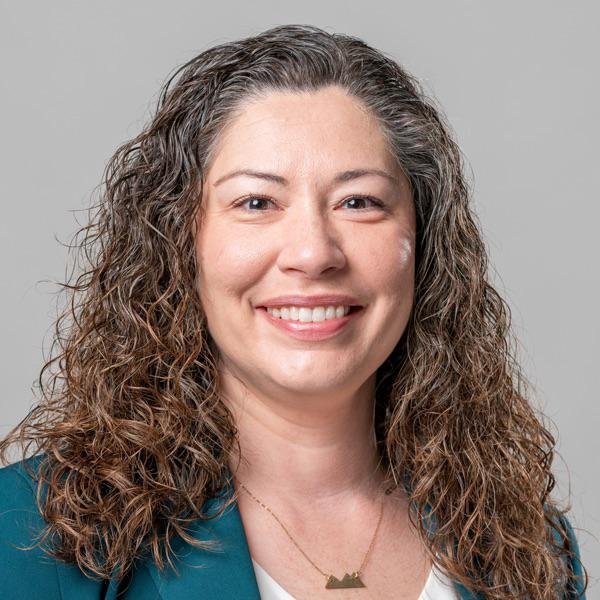
Kati Austgen
NEI Director of Public Engagement & New Nuclear, Mother, Outdoorswoman, Environmentalist
By Jack Austin
Kati Austgen’s LinkedIn page carries a simple declaration: “Advocacy for nuclear energy is love and compassion for Earth and all her inhabitants.” As Director of Public Engagement & New Nuclear at the Nuclear Energy Institute (NEI), she champions advanced reactor designs, but her commitment to the environment is rooted in childhood. Growing up in rural Indiana, she formed a deep bond with nature, calling the trees and forest creatures her earliest friends.
Initially drawn to veterinary medicine out of a love for animals, Austgen realized she could not face the pain of treating the sick and injured. Instead, she pursued nuclear engineering at Oregon State University. There, her studies sparked a conviction that the world was overlooking nuclear’s potential to transform energy systems. Beyond power generation, she also came to see nuclear science more broadly—such as isotope production for cancer treatment—as essential to human and planetary well-being.
Austgen said she advocates for nuclear energy because of its energy density, its unmatched safety record, and because it provides reliable energy 24/7 without sacrificing wildlife or biodiversity.
“Our world is very energy hungry, and most of the things that we associate with a good quality of life stem from having ready access to energy, whether it's electricity or heat, producing the goods and services that we all rely on,” Austgen said. “We want to be able to do that in a way that we have clean air, clean water, (and) room to get out and enjoy nature.”
As a conservationist and outdoors enthusiast, Austgen values nuclear energy’s small land footprint. She notes that many nuclear plants not only minimize land use but also support wildlife by maintaining conservation areas and protecting wetlands. Peach Bottom Nuclear Plant, for example, was recognized in 2011 for creating habitats that counter biodiversity loss, while 12,000 acres surrounding California’s Diablo Canyon are preserved as protected land.
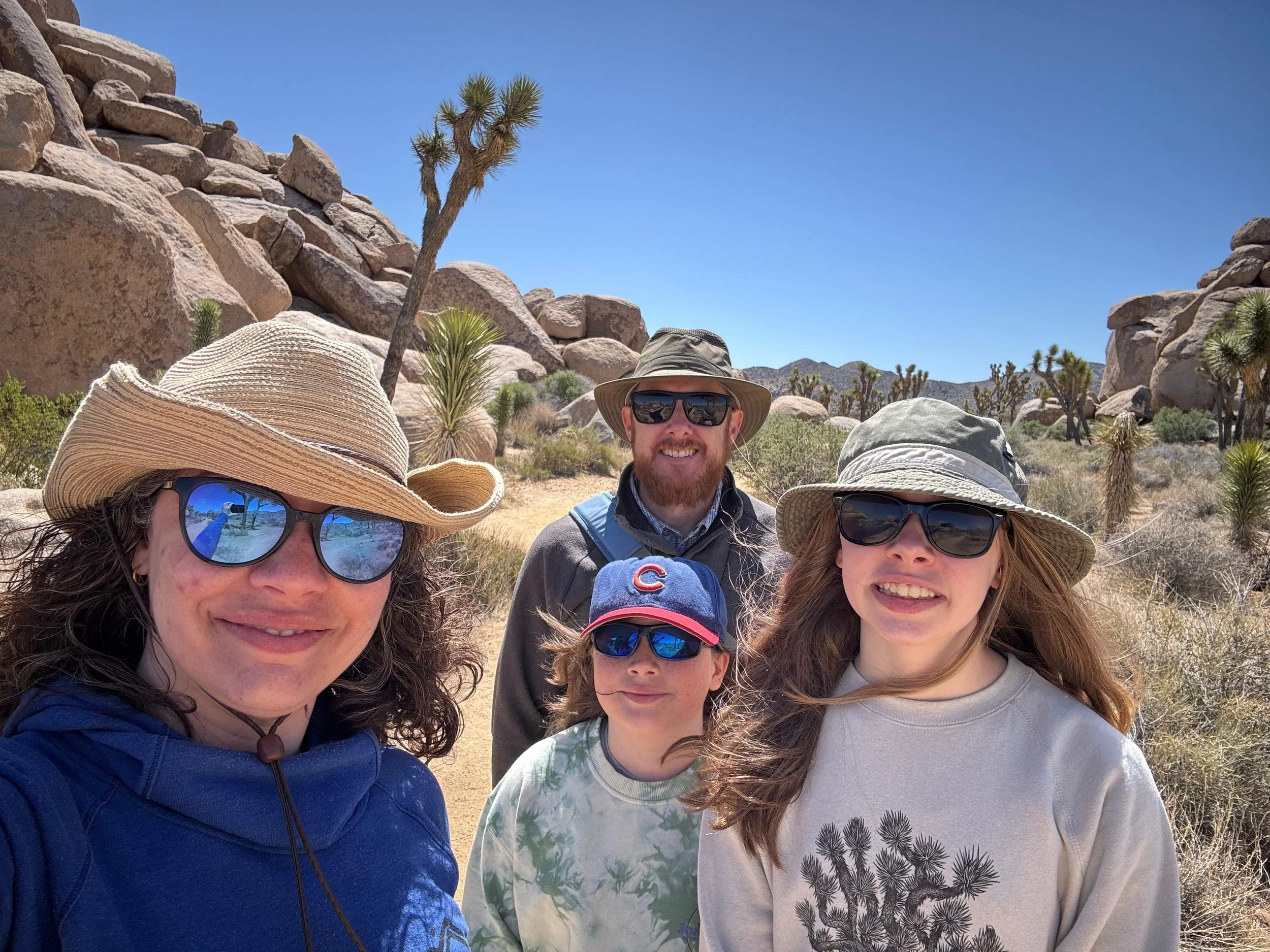
Austgen hiking with her family. She advocates for nuclear as a way to protect nature. (Photo courtesy of Austgen).
As Director of Public Engagement & New Nuclear at NEI, Austgen promotes advanced and small modular reactors for purposes like accommodating incremental power growth, providing power to remote locations, and decarbonizing industrial processes that use significant heat. Many of them could have mutli-use functions. While Austgen supports the current fleet of LWRs, she sees potential and opportunity in new nuclear construction.
“Their (the existing fleet) track record of performance is the foundation for everything we believe. But at some point we do have to build out new infrastructure,” Austgen said. “There are options to really match the use case with the end need. Can we break it up into smaller pieces and we can deploy them as the demand grows? If we're really going to decarbonize our world, we're going to need to not just produce carbon free electricity, but we have a whole lot of industrial processes that rely on heat… (A reactor) could produce the medical isotopes. And so again, thinking about that from the very beginning is really exciting.”
Austgen highlighted three reactor projects she’s most excited about: OPG’s BWRX-300 SMRs in Ontario, slated for 2029; TerraPower’s Natrium fast reactor with built-in energy storage to complement wind; and X-energy’s high-temperature gas reactors in Texas, paired with a Dow chemical plant to provide industrial heat.
A mother of two kids, Austgen said becoming a mother hammered home the importance of stewardship of resources and the environment to make sure her children have a healthy, pleasant future.
For working mothers, reliable electricity is vital to preserving pumped breast milk. A blackout once threatened Austgen’s stored supply, which was only saved thanks to a neighbor with power. Nuclear’s reliability remains one of Austgen’s strongest talking points in presentations representing NEI.
Austgen started her career at Callaway Energy Center (formerly Callaway Nuclear Generating Station), as a licensing engineer, supporting colleagues as they designed and maintained various plant systems. When she found her passion to advocate for nuclear energy and nuclear science was not being satisfied, Austgen looked for work opportunities at the Nuclear Energy Institute (NEI).
“I came to that realization that every day I want to be advocating and doing something to further our country’s and maybe even our world's use of nuclear energy,” Austgen said.
One of Austgen’s greatest roles at NEI is leading the Advancing Collaboration, Community Engagement & Public Trust (ACCEPT) Working Group , which coordinates industry efforts to enable early and lasting alignment with potential host communities. ACCEPT aims to bring together stakeholders in nuclear facilities to talk about best practices, experiences, and lessons learned as the new nuclear industry and communities engage with each other, Austgen said.
“If you're going to build this electricity generation asset in a community, you want to make sure that the community wants to host it, that people want to work there,” Austgen said. “People want to live and work in the same area.”
Austgen has been an environmental crusader her entire life. As a young girl she participated in a program, Kids for Saving Earth, that promoted recycling, sustainability, and ways to live in harmony with nature, even forming a chapter of the club with her childhood best friend.
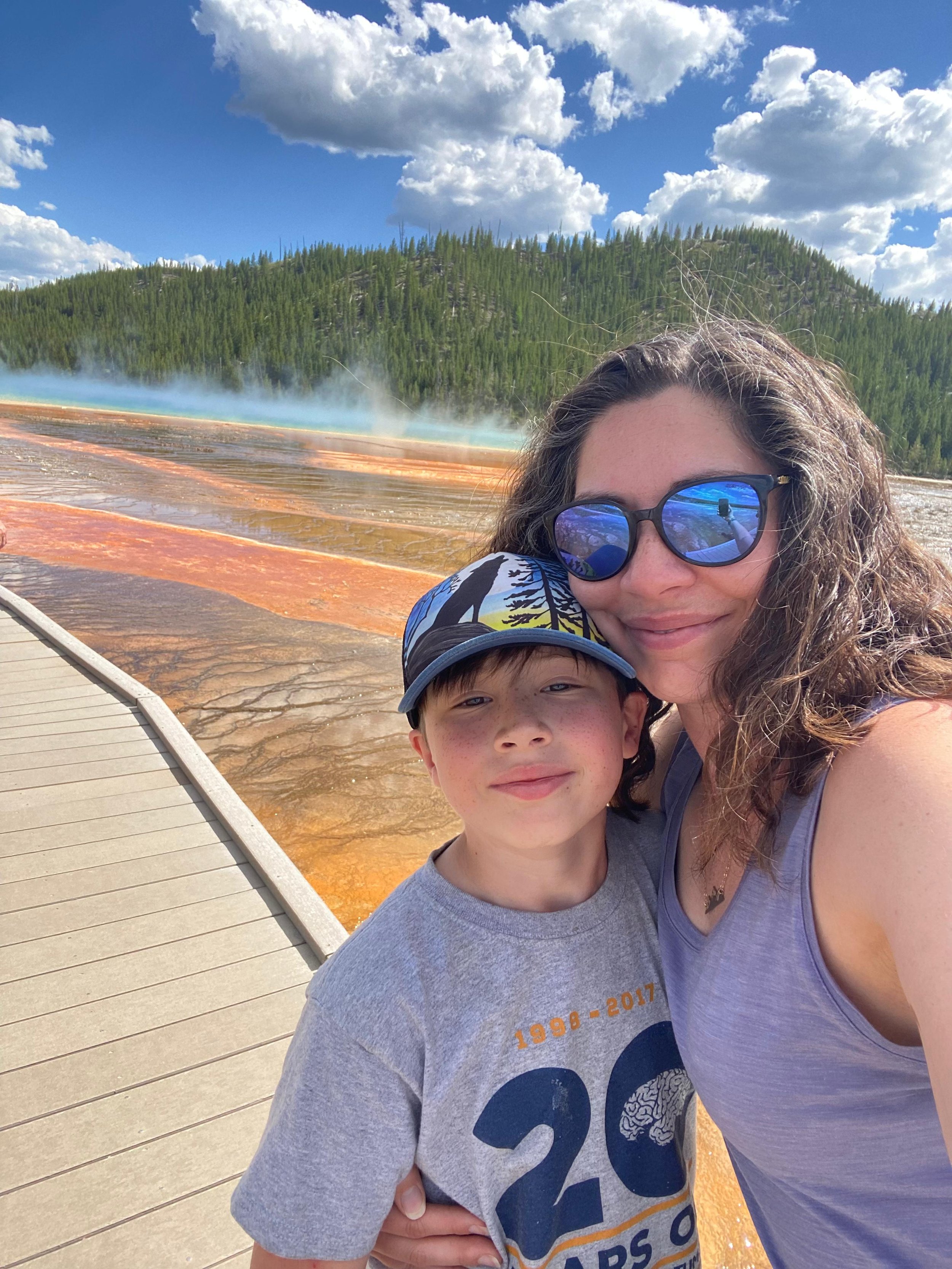
Austgen with her son in nature. Austgen said becoming a mother hammered home the importance of stewardship of resources and the environment to make sure her children have a healthy, pleasant future. (Photo courtesy of Austgen).
Philosophically, Austgen said, nuclear helps achieve many of the goals she’s held onto since being a young fledgling environmentalist.
“All of that philosophy of minimizing your impact, only using what is necessary, really getting the most out of the resources were all things that, ‘hey, that's what nuclear energy already does,’” Austgen said.
Forging personal connections is a strong way of communicating and gaining trust, Austgen said. Austgen finds herself in community with other mothers who are enthusiastic about hiking and natural spaces. Many of these people are receptive to nuclear energy discussion when talking with Austgen, and she said, many are surprised to learn no air pollution comes from a nuclear plant.
Moving forward, Austgen hopes to advance dialogue around nuclear energy on a domestic and international scale. She said she wants people to ask genuinely curious questions as part of a learning process.
“The state of our climate and our planet and our energy needs, they're not going to be slowing down, and projects take a long time, and that's okay. They've got to be done,” Austgen said. “We can find ways to start communicating early and build those relationships so that we're going through and making those decisions together… We're doing it for our kids and for future generations.”