Brendan Pittman
From Wisconsin to California, a Nuclear Advocate Finds His Fight
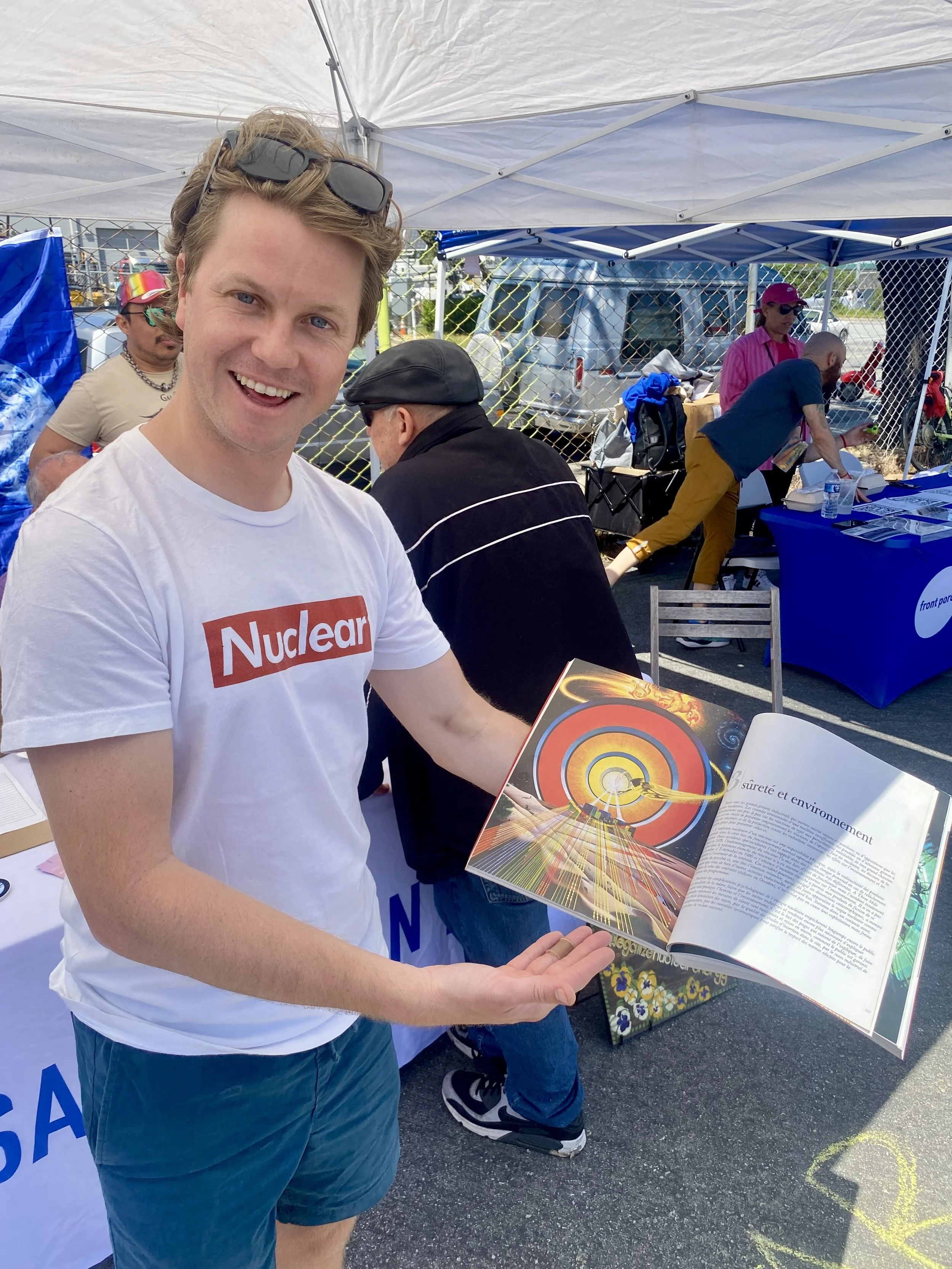
Pittman at Earth Day 2024 in the Bay Area, at a pro-nuclear booth.
On a windy day at Dolores Park in San Francisco, Brendan Pittman and a friend struggled to tie two flags between trees—one calling to “legalize nuclear,” the other depicting the Earth. The flags wouldn’t stay straight. The wind kept tearing them loose. The moment felt half–goofing off, half–earnest. But for Brendan, it captured something deeper: nuclear advocacy had stopped being a side interest and become part of his daily life, shaping his friendships, his politics, and the causes he was willing to show up for in public.
The scene felt symbolic. Fighting the wind to raise the flags mirrored Brendan’s broader fight for nuclear energy—an uphill, or rather upwind, battle he was determined to keep pushing forward.
Brendan didn’t grow up with strong opinions about nuclear power. Raised in a small town in Wisconsin, nuclear energy simply wasn’t on his radar. That changed years later after watching HBO’s Chernobyl in 2019, which sent him down what he describes as a nuclear “rabbit hole.” Drawing on personal research and his engineering background, Brendan concluded that nuclear power could be a safe and effective way to protect the environment—and soon became an active advocate.
Nuclear had first entered Brendan’s awareness years earlier, around 2016, when utilities and state officials began debating the uncertain future of California’s Diablo Canyon Nuclear Plant. At the time, the issue lingered in the background. By 2019, after deeper research, Brendan concluded that an accident like Chernobyl could not happen at California’s nuclear plants. He soon joined the fledgling Save Diablo Canyon movement, which he said solidified his belief that nuclear power was essential during energy crises and to prevent blackouts.
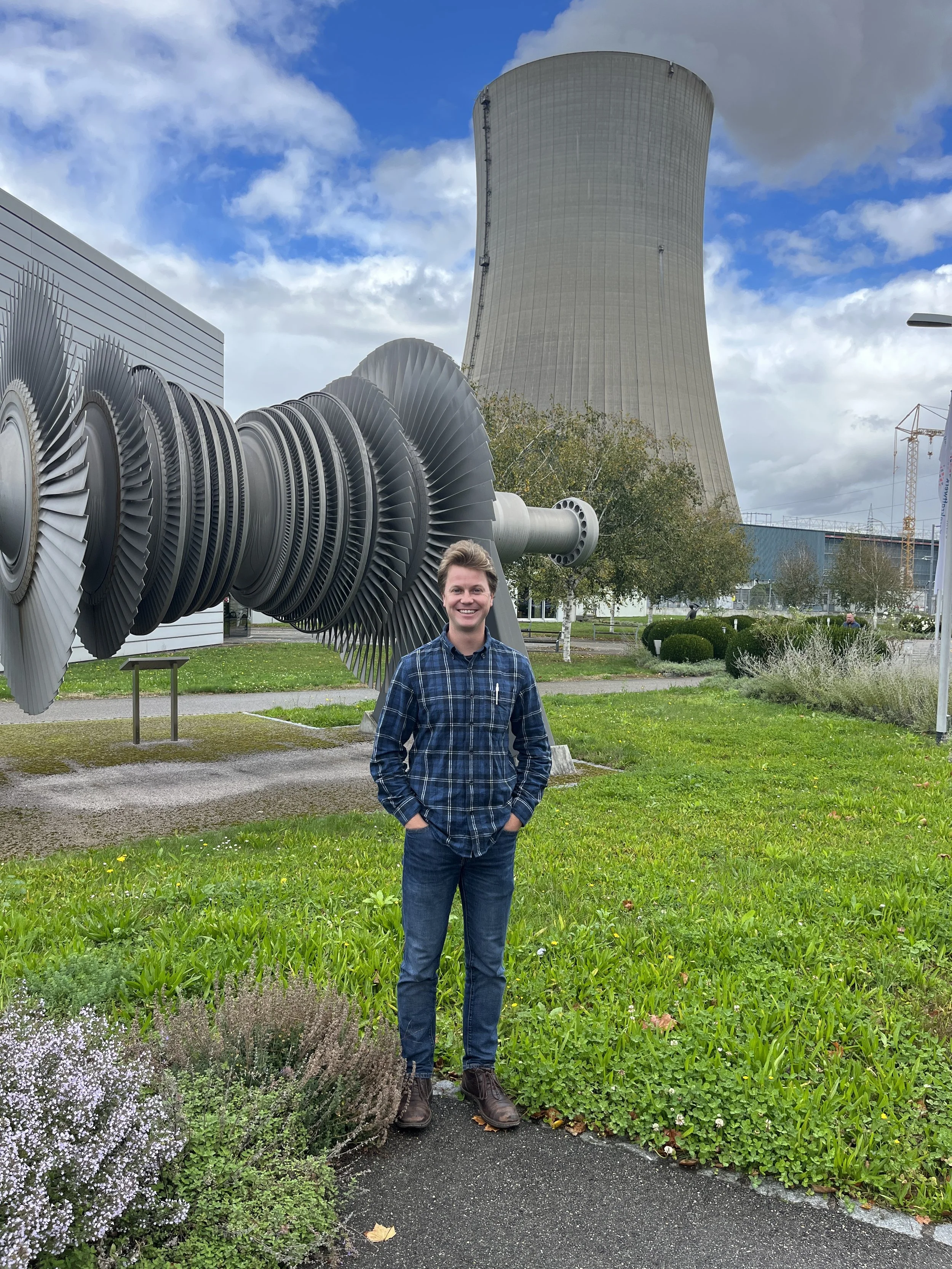
Pittman visiting Gösgen-Däniken nuclear plant in Switzerland, which he said provided the best tour he has experienced in his considerable nuclear tourism ventures.
“I support nuclear because I think it’s the one technology that checks all the boxes,” Brendan said. “I love to hike. I love the outdoors. I love clean air, clean water. I want that for our kids. I want that for people hundreds of years from now. The march of industrialization keeps moving forward, and this is something that can buffer the negative environmental impacts while allowing us to live a comfortable way of life.”
Brendan’s advocacy has taken many forms. He has participated in Earth Day events that include nuclear energy, gathered signatures in Berkeley to challenge a long-standing municipal ban, traveled to reactor sites and waste facilities around the world, and pushed local energy agencies to recognize nuclear as part of a clean electricity mix.
In 2024, Brendan launched a petition to amend Berkeley’s city charter to allow the civilian use of nuclear energy. Berkeley declared itself a “Nuclear Free Zone” under its 1986 Nuclear Free Act, which banned nuclear weapons and ultimately led to the decommissioning of UC Berkeley’s research reactor. After thousands of conversations on the streets, Brendan collected 400 of the 3,000 signatures required to place the measure on the ballot. More recently, pro-nuclear Berkeley students began collecting signatures for a similar petition and have already gathered more than 700 of the required 2,500 signatures. (you can volunteer with Berkeley NiCE for this effort, HERE!)
As a self-described “nuclear tourist,” Brendan has visited nuclear facilities across the U.S. and abroad. Domestically, he has traveled to Hole in the Head, Diablo Canyon, San Onofre, Palo Verde, and Point Beach. Internationally, he visited the Gösgen-Däniken nuclear plant in Switzerland, which he described as the best plant tour he has experienced, as well as the COVRA waste repository in the Netherlands, which he called “a model of how we should plan and maintain spent nuclear fuel.”
These visits shaped his view that the U.S. does a poor job of public engagement around nuclear energy.
“We’re very cagey about opening up access to the public, especially at nuclear plants,” Brendan said. “After 9/11, security changed a lot. But in the Netherlands, France, and Switzerland, they want people to come and visit. They want to educate people. It’s a completely different mindset.”
Brendan credits PG&E with making major strides in public engagement at Diablo Canyon. He said the utility went from minimal outreach in 2019 to one of the strongest touring and social media programs in the country, including an Instagram account with thousands of followers promoting the plant.
Now back in Wisconsin, Brendan is working to help reopen the Energy Education Center at the Point Beach Nuclear Plant, which he said would resemble the public-facing exhibits he saw in Switzerland. While many U.S. plants have similar facilities, Brendan said they are often closed to the public.
“I think it’s a really important element of education and transparency,” Brendan said. “Wisconsin is moving forward rapidly on new nuclear planning, and having an exhibit like that open to the public adds value for people who may not have any experience with the technology.”
Brendan argues that the U.S. nuclear industry has learned from past accidents. While failures in oversight and preparedness contributed to incidents such as Three Mile Island, Chernobyl, and Fukushima, he said those lessons have reshaped safety practices.
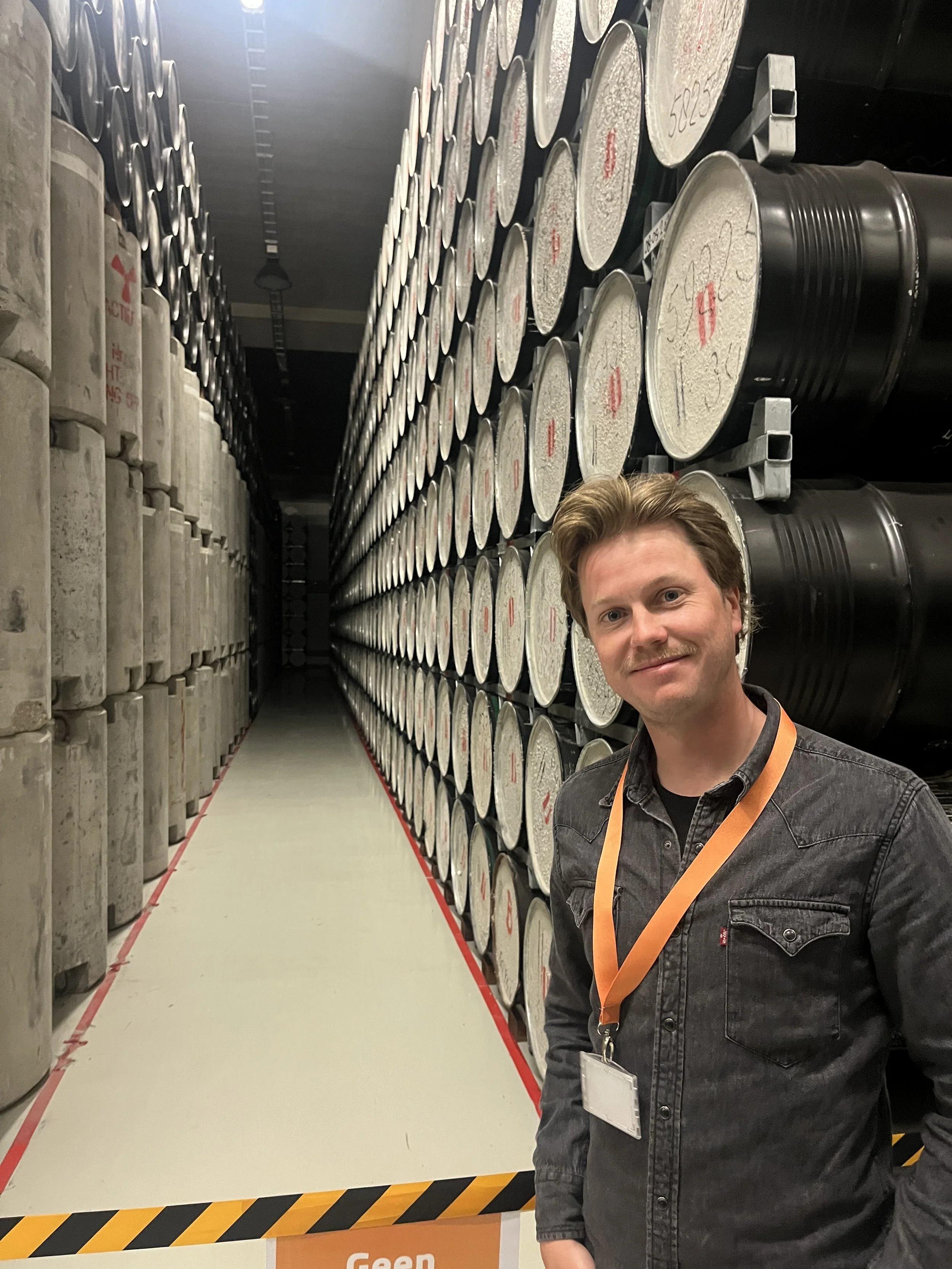
Pittman visiting the COVRA waste repository in the Netherlands, which he called “a model of how we should plan and maintain spent nuclear fuel.”
“That type of incident [Chernobyl] technically couldn’t happen here,” Brendan said. “There was no containment, and the conditions of those tests wouldn’t be allowed in the U.S. All of these accidents created a wealth of information that we’ve applied. I think the industry is better prepared than it’s ever been.”
Last year, Brendan joined other Bay Area advocates in pushing Ava Energy—formerly East Bay Community Energy—to include nuclear power in its official power content label. In 2024, advocates urged the agency to reconsider its refusal to accept nuclear energy credits, which other community choice aggregates had already adopted to lower costs. That fall, Ava Energy approved a power option that included nuclear credits for the first time.
“Symbolically, it means a lot,” Brendan said. “It shows they’re not afraid of public pushback. It was a huge win for our local area. It’ll save money for ratepayers, but it also moved the conversation—from ‘nuclear is bad’ to ‘what is nuclear?’”
Brendan says the nuclear community has become deeply integrated into his life. He describes fellow advocates as people who share core values—clean air, clean water, affordability—and a commitment to science-based solutions. Many, he said, fully integrate the activism into their lives, and he “goes to bat” for them.
Looking ahead, Brendan hopes Wisconsin will build two to three large nuclear plants, enabling the state to retire coal over the next decade and clean up environmental damage at sites like Oak Creek, Weston, and Columbia. After that, he hopes to take on natural gas.
He is optimistic about Wisconsin’s nuclear future because the state has no construction moratorium, bipartisan political support, and legislation advancing site studies and tax incentives. California, by contrast, faces entrenched opposition and regulatory hurdles that make new nuclear development far more difficult.
Brendan believes young people will drive the next chapter of nuclear advocacy.
“We’re going to need more and more young voices,” he said. “I’m glad I got into this young—but it’s going to take a lot of people.”
By Jack Austin