Jennifer Hayden
Inside America’s Most Comprehensive Nuclear Museum — and the President Who Became a Nuclear Supporter
By Jack Austin
When Jennifer Hayden arrived at the National Museum of Nuclear Science and History sixteen years ago, she didn’t think of herself as an advocate for nuclear technology. Her background was in museums and philanthropy, not energy policy.
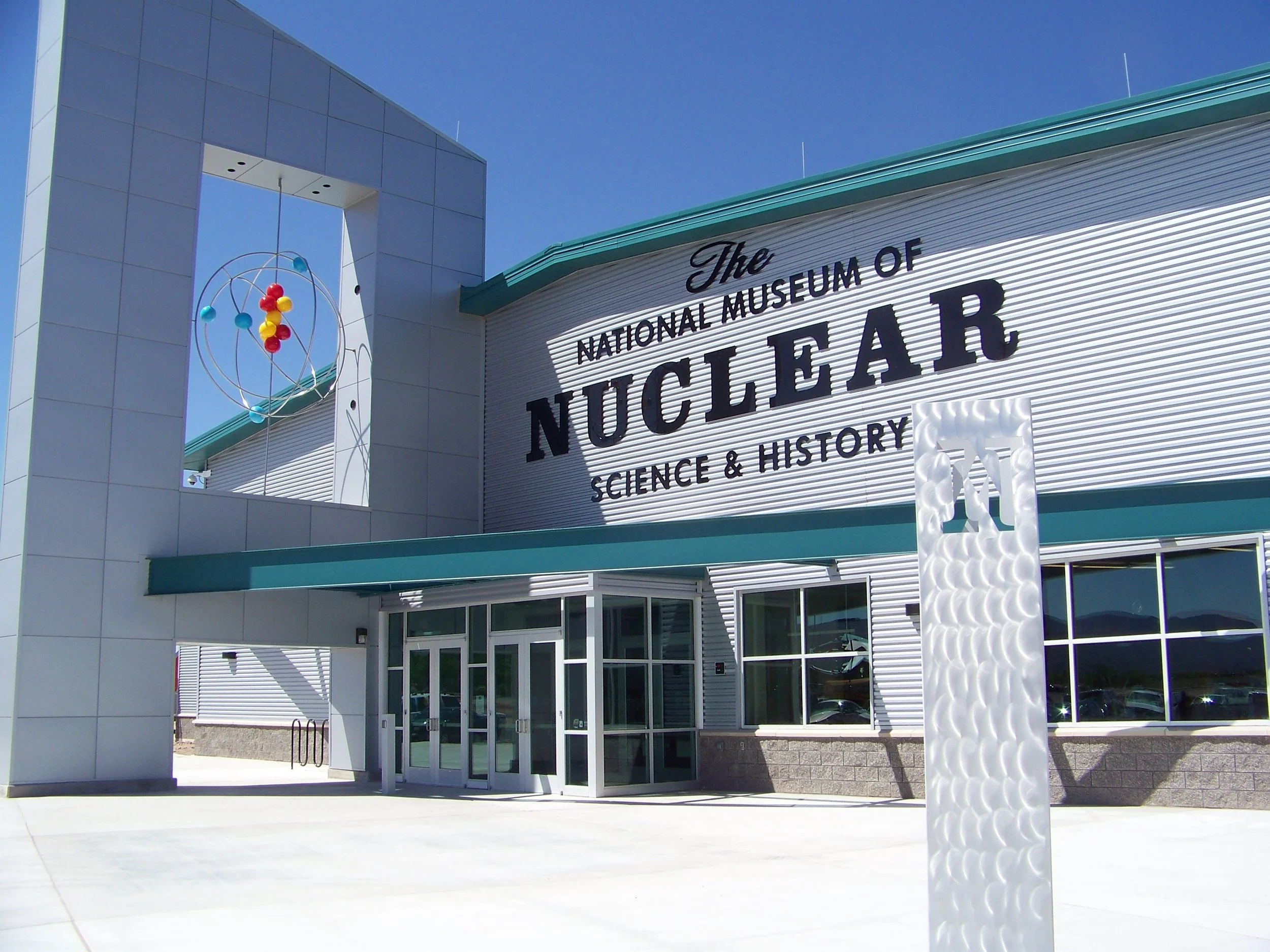
The National Museum of Nuclear Science & History, in Albuquerque, New Mexico informs the public about nuclear weapons, energy, and applications like nuclear medicine. (Photo courtesy of Bernadette Robin, director of communications.
“I have to be careful, because I do run a nonprofit, 501(c)(3) museum,” she said. “I’m not an advocate in the sense of lobbying. But I am a supporter of nuclear energy, nuclear space exploration — nuclear in general.”
That support, she says, didn’t come from ideology. It came from years of exposure to the full story of nuclear science — and from the people she met along the way to becoming the president and CEO of the museum.
“My love came because I’ve learned so much in my time at the museum,” Hayden said. “As a carbon-free energy source, it is incredibly appealing to me. But I have to say it’s been meeting the people — the men and women who work in the energy industry — who have really solidified that for me.”
James Stemm, a longtime curator at the museum, said many visitors arrive with narrow or emotional impressions of nuclear energy — and leave with a broader picture.

Jennifer Hayden, the president and CEO of the museum, became a supporter of nuclear energy as she recognized its small land footprint and carbon benefits. (Photo courtesy of Robin)
“Our approach is to give people enough context so they understand why decisions were made and what the consequences were,” Stemm said. “When people see the whole picture, nuclear energy looks very different.”
The Albuquerque museum presents the Atomic Age in all its complexity: the Manhattan Project and the Cold War, medical breakthroughs and radiation research, weapons, waste, and nuclear energy. Hayden describes it as an informal learning space designed to inform, not persuade.
“All museums are informal education centers,” Hayden said. “We try to provide interesting and engaging information in an unbiased and factual manner.”
Yet engaging deeply with that material changed the way she thought about nuclear energy. Early in her tenure, Hayden says, she mostly approached the topic as a marketing professional. Over time, as she listened to scientists, engineers, and industry workers, the bigger picture began to take shape.
She saw the land footprint of nuclear compared with wind and solar. She saw the scale of rising electricity demand. And she thought about the world her two sons — now teenagers — will inherit.
“I am a mother of two sons,” she said. “The carbon-free energy source is something that is incredibly appealing to me. It doesn’t take up quite as much space, and it provides so much energy for so many people. The fact that we’re in such a time of our lives that we need more energy than ever — I do firmly believe that nuclear is one of the best options we could consider.”
Nuclear Science Week — a national educational initiative managed by the museum — also exposed Hayden to the breadth of the field. Through it, she has met workers from utilities, startups, and research organizations.
“Whether it’s Southern Nuclear, Kairos Power, or others, they’re really such impressive people who work in such a necessary industry,” she said. “Learning from them has been incredibly meaningful.”
Inside the museum, visitors often arrive with strong opinions shaped more by imagery than information. Hayden sees that especially among New Mexico students.
Many, she said, initially associate nuclear with “bombs, destruction, war, or The Simpsons.” Students from communities near power plants, by contrast, think first of “electricity, light bulbs, and turning on the lights.”
“Hollywood has probably shaped America’s perception of nuclear more than science classrooms have,” Stemm said. “But when you walk through the gallery and see medicine, space exploration, and clean power, you realize nuclear isn’t just one thing.”
That gap — between fear and familiarity — is one reason the museum is planning to completely rebuild its nuclear-energy gallery by 2027. Hayden believes the story can be told more clearly, more comprehensively, and with richer context.
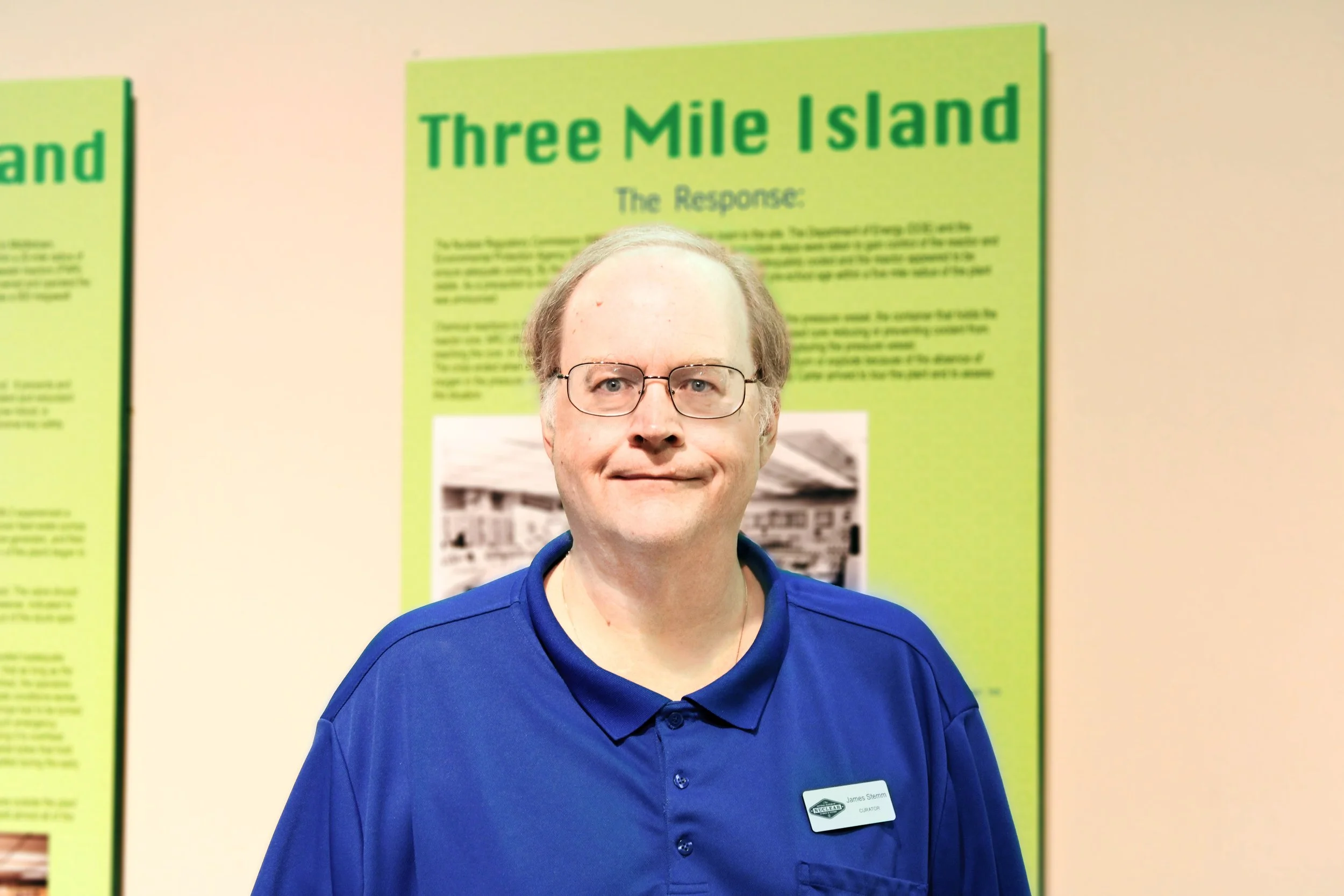
Museum curator James Stemm said he aims to give context to the history of nuclear, emerging with a new view of nuclear energy and understanding the importance of space exploration and nuclear medicine. (Photo courtesy of Robin)
At the same time, she remains firm that the museum isn’t in the business of advocacy — even if she personally sees nuclear as essential.
“My hope is that visitors of all ages, all backgrounds, come in and take an opportunity to engage with nuclear, learn about nuclear on their own terms, and then draw their own conclusions,” she said.
But for Hayden, after sixteen years of immersion in the history and science — and after meeting the people who keep nuclear plants operating — the conclusion feels unavoidable.
“I am a supporter of nuclear energy,” she said simply. “It’s one of the most promising tools we have to provide reliable, carbon-free power — and understanding it starts with telling the story honestly.”